Overreading this painting I saw on Instagram
The other day I was watching my sister scroll through Instagram, and this reel came up on her feed.
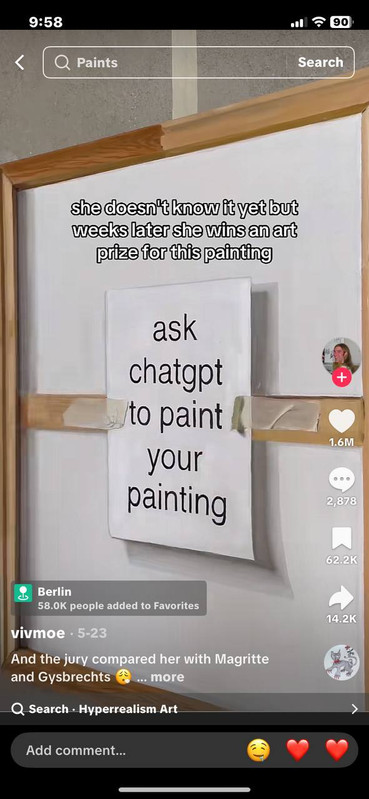 ignore that the screenshot is from Tiktok instead
I didn’t think much of the painting at first, but sitting with it for 5 seconds ended up pulling me down a rabbit hole of considering artmaking in an automated world.
So sit with me for a second.
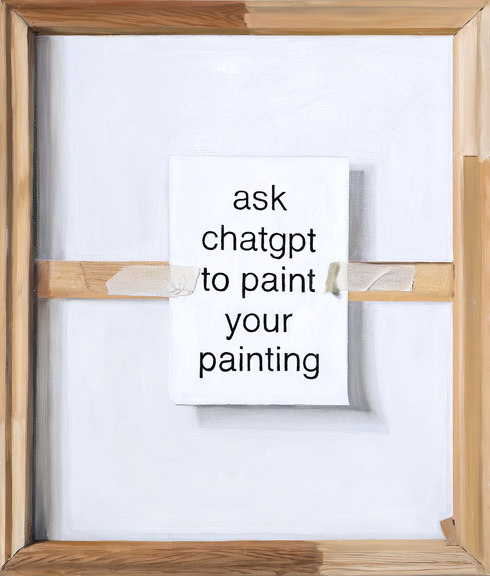 ifyourereadingthisitsallsaid (2023), oil on canvas, 60x70cm
On a surface level, ifyourereadingthisitsallsaid (2023) is referencing a core critique of modern AI art1 as intentionless due to its level of automation. The word “intent” can be replaced with many other things; human creativity, skill, “soul”. Whatever it is, it is the perceived lack of labour in the generative process of AI art that is targeted in the argument against an automated process in art.
The fallacy of this critique lies in how it takes for granted the many ways current day artmaking is an automated process. Paintbrushes, oils, pencils, and canvases are made in factories. The features of your digital art program mimic brush strokes through code and automated calculations that you parse through a UI. That’s ok, that’s the point of automation, so you don’t have to build your own camera or code your video game in Assembly. The question of what form the artist’s involvement in their work must take is a very old one.
I could get sucked into this rabbit hole, but I don’t have the technical knowhow to nitpick the differences between how an chatGPT generates images and how the brain does it.
Anyway, we return to the painting, which I think has honestly captured this contradiction very well! Outside of context, it might feel a bit silly to recreate the appearance of arial text on white space using oil on canvas, like you’re going through the unnecessary steps of retracing the letters by hand, redoing all the manual work of kerning and measuring line height that is built into the digital typeface.
But the irony’s the point! Oil on canvas is the very cliche of mediums used in traditional fine art, the brush stroke around the note of paper is a sign that this was painted by hand, and it feels uncanny to see this rendering on what I assume is a reference to the flat aesthetic of Charli XCX’s 2024 album.
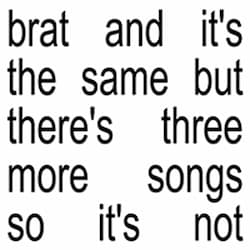 Brat deluxe edition cover
The choice to reference this album is a very apt one. Lacking sensible borders around the image, the justified text leaves ugly white spaces between words, and the over compressed look with the blurred outline around the words gives an impression of over compressed images from the Web 1.0 era. I like this anecdote of them having to tell the printer this was the right file, like the printer thought they sent them a draft at the wrong dpi or something.
The visuals of the album would perfectly embody the idea of automation without intent… if it didn’t take 5 months to create. In reality, the design process behind the album was unsurprisingly a very deliberate one. This seemingly simply look is the final product of sifting through “500 different shades of green”, and while Arial is the base, the actual typeface is still a custom made one. Note their reasonings in the interview linked above for their choices, they wanted a font that “wasn’t precious”, something that felt “opinion-less”. Ironically, a lot of effort was put into making this piece feel “effortless”!
So it’s quite meta actually, referencing this in a piece reflecting on “perception, artificial intelligence, and authorship”… whatever that means. I may be reading into this more than intended, but art is half made by the audience anyway. Looking at this artwork was a fun meditation on the artmaking process and how it contributes to our works, whether it’s a physical painting by hand or text on a digital surface. The combination of the two makes for neat contrast.
Thank you vivmoe for the ride. And thank you to whoever’s reading this. This was partly just to get me into writing, part testing how blog posts look. Uhh, Merry Christmas?
Any artwork generated using text-to-image models after the AI boom. Vague, but you get it.↩